- The AI Operator
- Posts
- Your AI rollout is failing (here's why)
Your AI rollout is failing (here's why)
Why 87% of AI implementations fail (and the 4-week framework that fixes it)

Simeon Krastev
June 11, 2025
Hey there,
Last week, I spoke with a CEO who had just invested $ 250,000 in AI tools for his 50-person marketing agency. Six months later, his team was still manually qualifying leads and chasing follow-ups, just as they had in 2019.
Sound familiar?
When I showed him the three critical mistakes his company was making, everything changed. Within two weeks, his team's AI adoption rate jumped from 12% to 78%. Three months later, they're processing 3x more leads with the same headcount.
The reality is that most AI implementations fail not because the technology doesn't work, but because companies completely botch the human side of the equation. This is costing them hundreds of thousands in wasted investment and missed opportunities.
In today's edition:
The 5 critical mistakes that turn AI rollouts into expensive disasters
How successful companies get 80 %+ adoption rates (while others struggle to hit 20%)
Step-by-step framework to avoid the AI adoption nightmare
Real case studies from companies that got it right (and wrong)
The 5 AI Adoption Mistakes That Kill ROI
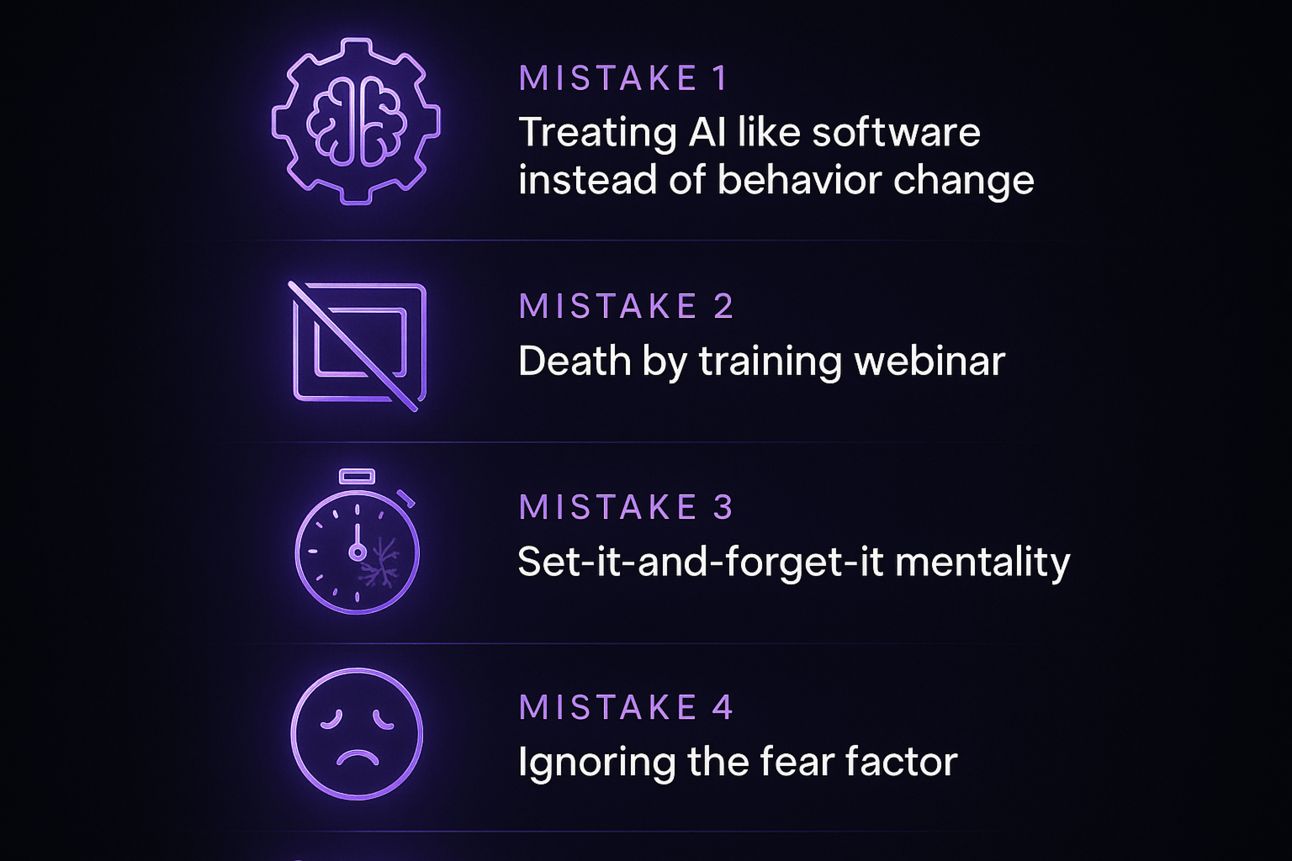
+ a bonus mistake below…
Let's cut to the chase. These are the five mistakes that separate successful AI implementations from expensive failures:
1. Treating AI Like Software Instead of Behavior Change
The Problem: Most companies approach AI adoption like installing new software - buy licenses, send a company-wide email, and expect magic to happen.
Why It Fails: AI adoption is 80% psychology, 20% technology. Your team needs to change how they think about work, not just learn new buttons to click.
The Fix:
Start with your AI champions (5-10% of naturally curious employees)
Let them experiment and share wins internally
Create psychological safety around "AI mistakes"
Position AI as a co-pilot, not a replacement
Real Example: An immigration law firm gave AI tools to everyone at once. Adoption rate: 15%. They pivoted, started with 3 tech-savvy associates, and let them become internal advocates.
Six months later: 85% adoption across all attorneys.
2. Death by Training Webinar
The Problem: Companies host 2-hour "Future of Work" presentations with zero hands-on practice, then wonder why nobody uses the tools.
Why It Fails: People learn by doing, not by listening to theoretical benefits. Generic training doesn't show them how AI solves their specific daily problems.
The Fix:
Create 15-minute, role-specific tutorials
Show marketers how to generate ad copy for their actual campaigns
Show sales reps how to qualify leads using their real qualification criteria
Provide templates and examples they can use immediately
Implementation Steps:
Record your top performers doing their actual work
Create AI workflows that replicate those exact processes
Train people on their real tasks, not hypothetical scenarios
Provide "AI cheat sheets" for common use cases
3. The Set-It-and-Forget-It Mentality
The Problem: Leadership thinks AI adoption is a one-time event rather than an ongoing process requiring support and optimization.
Why It Fails: AI tools evolve rapidly, use cases expand over time, and people need continuous support to build confidence and discover new applications.
The Fix:
Schedule weekly "AI office hours" for questions and troubleshooting
Create internal Slack channels for sharing AI wins and tips
Assign AI champions as mentors for hesitant team members
Regularly update training based on new features and use cases
4. Ignoring the Fear Factor
The Problem: Companies pretend their employees aren't terrified that AI will eliminate their jobs, leading to passive resistance and sabotage.
Why It Fails: Fear creates resistance. Resistance kills adoption. You can't logic your way out of an emotional problem.
The Fix:
Address job security concerns directly and honestly
Show how AI eliminates boring tasks, not entire roles
Highlight career advancement opportunities for AI-skilled employees
Share success stories of employees who've grown their roles through AI
Real Example: An accounting firm saw 23% adoption after 6 months. They held "AI anxiety" sessions where employees could voice concerns anonymously. They addressed each fear directly, showed career progression paths for AI-skilled accountants. Adoption jumped to 71% in 8 weeks.
5. Measuring the Wrong Metrics
The Problem: Companies track license utilization instead of business impact, missing the real indicators of successful adoption.
Why It Fails: High usage doesn't equal high value. Someone could use AI tools daily but generate zero business impact.
The Fix: Track these metrics instead:
Time saved on specific tasks
Quality improvements in output
Employee satisfaction with AI tools
Business outcomes (faster response times, higher conversion rates)
Voluntary AI usage (beyond required tasks)
The 4-Week AI Adoption Framework
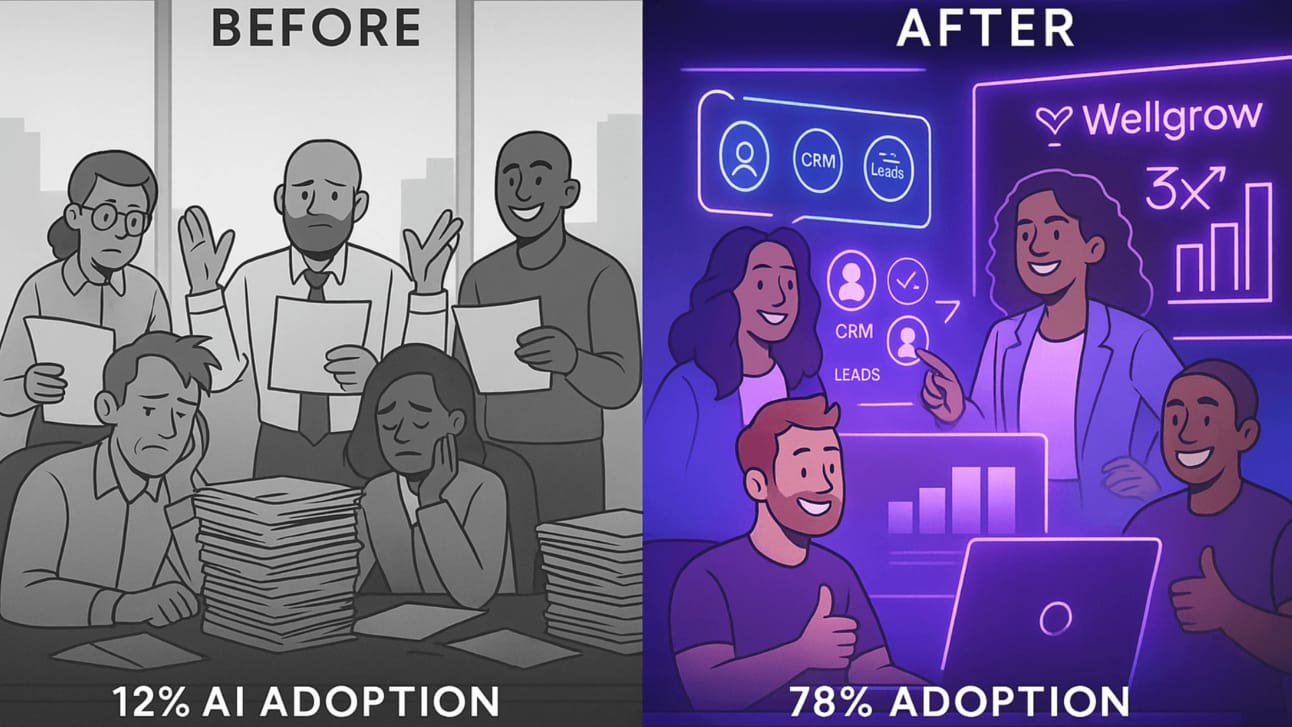
It’s worth doing things the RIGHT way…
Here's how to implement AI successfully in your organization:
Week 1: Foundation & Champions
Identify your AI champions (look for early adopters and influencers)
Conduct "AI readiness" assessment
Address fears and concerns in small group sessions
Set clear expectations and success metrics
Week 2: Pilot Implementation
Start with 1-2 high-impact use cases
Train champions on specific workflows
Create feedback loops for rapid iteration
Document wins and share them company-wide
Week 3: Expand & Support
Roll out to the early majority (next 30% of the team)
Establish ongoing support systems
Create an internal knowledge base of best practices
Begin measuring business impact metrics
Week 4: Scale & Optimize
Expand to the remaining team members
Optimize workflows based on feedback
Plan the next phase of AI implementations
Celebrate successes and learn from failures
Common Implementation Mistakes to Avoid
Trying to boil the ocean - Start with 1-2 specific use cases rather than implementing AI everywhere at once.
Skipping change management - Treat this as an organizational change initiative, not a technology project.
Ignoring the skeptics - Your biggest critics often become your strongest advocates once they see real value.
Not celebrating wins - Make AI success stories visible and celebrate employees who embrace the technology.
Quick Wins: 5-Minute AI Adoption Boosters
• AI Success Wall: Create a shared document where employees post their AI wins and time savings
• Buddy System: Pair AI enthusiasts with skeptics for peer-to-peer learning
• Weekly AI Challenge: Give teams small AI tasks to complete and share results
• Fear Audit: Anonymous survey to identify specific AI concerns and address them directly
AI Tool Spotlight: SearchAtlas by LinkGraph
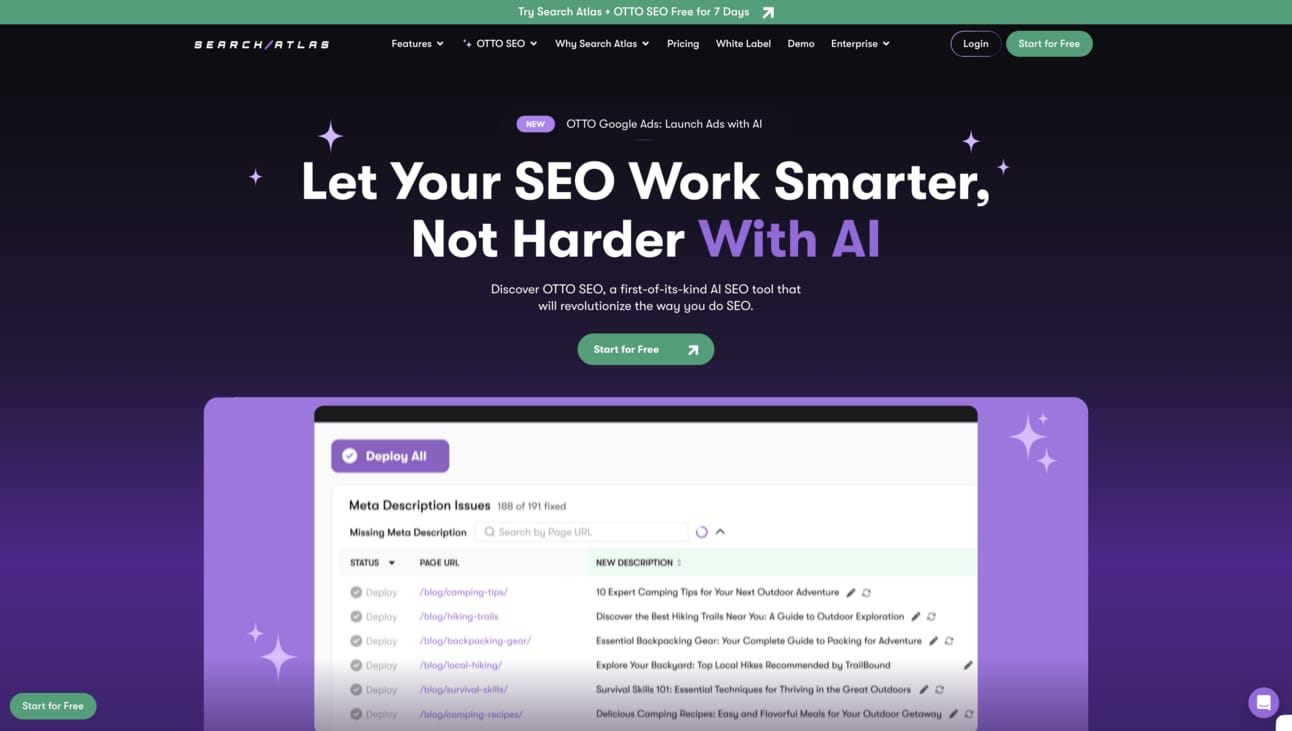
I've been exploring SEO tools that blend AI with actionable insights, and SearchAtlas consistently impresses with its all-in-one approach to modern search optimization. Built for content teams, agencies, and SEO pros, it goes beyond basic keyword tools by integrating SERP analysis, content briefs, and AI-driven optimization workflows.
Best use case: Agencies and in-house teams that want to scale SEO content production without sacrificing quality. Ideal for teams managing multiple clients or large content libraries.
Verdict: With features like AI-generated content outlines, real-time optimization scoring, and backlink tracking, SearchAtlas is a powerful platform that saves time and delivers results. It's not the cheapest option, but its depth and automation justify the investment for serious SEO strategies. A great pick for growing teams looking to operationalize SEO with AI precision.
Quick Question
What's your biggest AI adoption challenge?
Employee resistance/fear
Lack of clear use cases
Technical implementation issues
Measuring ROI/success
Leadership buy-in
Reply with your answer to vote (takes 2 seconds)
Helpful videos this week
What are the functions that I leverage AI in within my business? I break it down in the video below 👇👇
Want Help Implementing AI Successfully?
Struggling with AI adoption in your organization? We help companies implement AI systems that employees use and love. Our approach focuses on change management, not just technology.
Talk soon,
Simeon Krastev
Founder
Reply