- The AI Operator
- Posts
- The AI system that automatically follows up with prospects
The AI system that automatically follows up with prospects
Until they respond or completely...

Simeon Krastev
April 30, 2025
Hey there,
A client was manually sending follow-ups to 200+ leads per week, with most prospects needing 7+ touches before responding. We implemented an AI follow-up system that works 24/7, and within 3 weeks, their response rate jumped from 12% to 37%. The best part? Their sales team reclaimed 23 hours weekly to focus on actual selling instead of chasing leads. Today, we will talk about THE HOW.
In today's edition:
• The complete AI follow-up system that triples response rates (full setup guide inside)
• Why most follow-up sequences fail (and the psychological triggers that actually work)
• How to make AI-generated messages sound authentically human
• The unexpected benefit of multi-channel follow-up that's closing 22% more deals
The AI System That Automatically Follows Up With Prospects Until They Respond
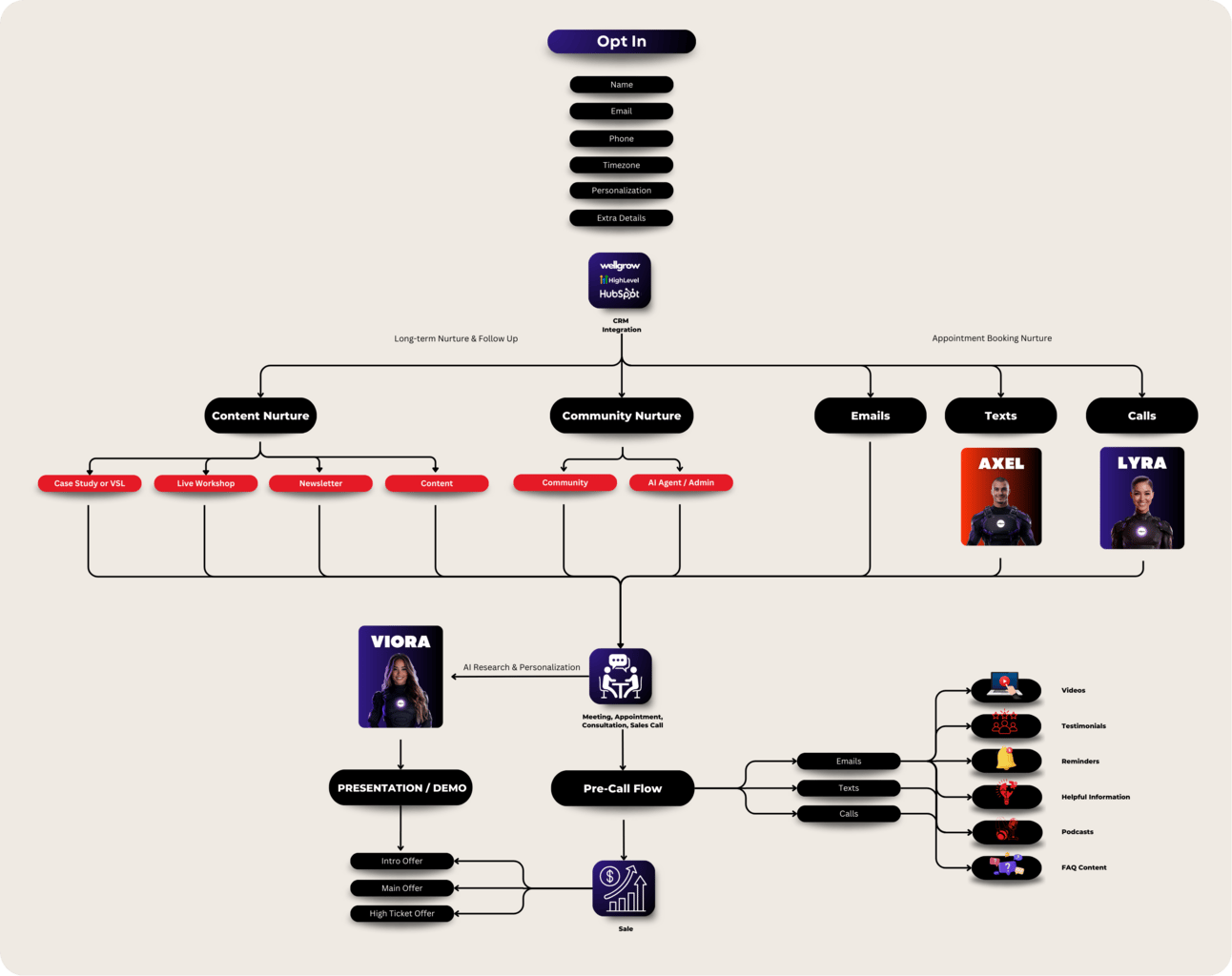
The after-sign-up experience
The average sale now requires 8-12 touches before a prospect responds, yet most salespeople give up after 2-3 attempts. This disconnect creates a massive opportunity gap where your competitors are leaving money on the table - and you can capitalize on it.
The challenge isn't knowing that persistent follow-up works; it's implementing a system that can execute it flawlessly without consuming your team's valuable time or sounding robotic and desperate.
Here's the exact AI follow-up system that's consistently tripling response rates for our clients:
Phase 1: Build Your Multi-Channel Framework (One-Time Setup)
The foundation of an effective follow-up system is reaching prospects where they're most receptive. Different people respond to different channels, and timing matters significantly.
Select your communication channels
Email (primary channel for business communication)
Voice calls (pattern interruption and personal touch)
SMS (highest open rates at 98%)
LinkedIn (professional context and social proof)
Video messages (highest engagement when used sparingly)
Set up your AI tools
Claude or ChatGPT for message generation and personalization
ElevenLabs for voice message creation
Behiiv for newsletter and Active Campaign for email optimization
Make or Zapier for workflow automation
Your CRM for data storage and tracking
AI Voice & Chat Agent Platform (I’m biased, but using Wellgrow)
Create your channel-specific templates
Email templates (5 variations with different angles)
Voice scripts (3 variations, each under 50 seconds)
SMS messages (3 variations, each under 160 characters)
LinkedIn connection notes and follow-ups
Video message scripts (for strategic deployment, as these will be manual)
The key is creating templates that feel personalized but can be automatically customized by AI for each prospect. Focus on value-driven messages rather than "just checking in" or "following up."
Phase 2: Design Your Intelligent Sequence Logic
This is where most follow-up systems fail - they use rigid, time-based sequences instead of responsive, behavior-based logic.
Create your master sequence
Day 0: Initial outreach (email + LinkedIn connection)
Day 1: Value-add email (relevant content/insight)
Day 2: Voice message (pattern interruption)
Day 3: SMS + email combination
Day 5: LinkedIn follow-up + email
Day 8: Video message (highest pattern interruption)
Day 12: "Breaking up" email
Day 21: Restart sequence with new angle
Implement behavioral triggers
Email open → Accelerate next touch to 4 hours later
Link click → Send the related case study immediately
LinkedIn profile view → Send connection request
Partial response → Human takeover protocol
Out-of-office reply → Reschedule sequence based on return date
Set up adaptive messaging
Configure AI to reference previous interactions
Implement progressive disclosure of value propositions
Create escalation paths to different value angles
The magic happens when your system adapts in real-time to prospect behavior and provides value at every interaction, rather than the typical “Just following up” or “Bumping this up in your inbox” messages.
One client saw their response rate jump from 14% to 41% simply by implementing the behavioral triggers that accelerated follow-up when prospects showed interest.
Phase 3: Implement The Technical Setup
This is surprisingly straightforward with modern tools:
Connect your data sources
Link your CRM (using GHL here) to your AI agent and automation platform (Wellgrow, Make, or Zapier)
Connect email, SMS, and voice platforms
Set up LinkedIn automation (carefully, to avoid restrictions) - We’ve had great success with Prosp.ai
Build your automation workflows
Create trigger-based workflows for each channel
Set up decision trees based on prospect actions
Implement time-based fallbacks when no action is taken
Configure AI personalization
Train AI on your best-performing messages and conversations of your team
Set up dynamic field insertion (company, role, pain points)
Implement sentiment analysis to adjust tone based on previous interactions
The technical implementation typically takes 2-3 weeks, but the ROI is immediate and substantial. One consulting client recovered 64 previously "dead" leads in the first month after implementation, resulting in 11 new demos and 4 closed deals worth $27,600.
Phase 4: Optimize Based On Response Data
The system becomes more effective over time as you gather data:
Track channel-specific performance
Which channels get the highest response rates?
Which message sequences convert best?
What times of day generate the most engagement?
Implement A/B testing
Test different value propositions
Experiment with message length and tone
Try various call-to-action formats
Refine your AI prompts
Use successful responses to train your AI
Identify patterns in messages that generate engagement
Continuously update your templates based on results
One client doing outbound voice outreach discovered that their Thursday voice messages got 3.7x more responses than any other day - information they used to restructure their entire sequence for maximum impact.
Video Walkthrough of the AI Sales Infrastructure
Real-World Results
The impact of implementing this system has been consistent across industries:
Average increase in response rate: 65%
Reduction in sales team follow-up time: 91%
Increase in qualified meetings booked: 37%
Decrease in sales cycle length: 22%
The most surprising outcome? The quality of conversations improved dramatically.
When prospects respond to an AI-driven sequence, they're typically more engaged and further along in their decision process than those who respond to traditional follow-up methods.
As one client put it: "The leads that respond to our AI sequence are already halfway sold. They've seen our value proposition from multiple angles and have had time to consider it. Our closing rate on these conversations is nearly double our normal rate."
Common pitfalls to avoid:
Don't make messages too generic - personalization and value in the touch-points is essential
Don't overuse the same channel - variety creates pattern interruption
Don't sound desperate - maintain confidence throughout
Don't forget to include clear calls-to-action in every message
Don't let AI run indefinitely - set a reasonable endpoint (30-45 days max)
AI Tool Spotlight: Instantly.ai
I've been testing Instantly.ai for email outreach automation for a dozen clients, and it's delivering open rates 31% higher than traditional email platforms. Unlike basic email tools, Instantly uses AI to optimize send times, warm up domains properly, and rotate between multiple sending accounts to maximize deliverability.
Best use case: High-volume outreach campaigns where deliverability is critical. I migrated a client's campaign from Mailchimp to Instantly and saw their inbox placement rate jump from 62% to 94%, with corresponding improvements in response rates.
Verdict: Worth the $37/month starting price if you send more than 500 outreach emails monthly. The deliverability improvements alone provide immediate ROI, not counting the time saved with their automation features.
Quick Wins: 5-Minute AI Implementations
• Create a "response intent detector": Connect your email to Claude through Make.com to automatically analyze prospect responses and categorize them as positive, neutral, or negative. This helps your team prioritize which responses need immediate attention, increasing conversion on hot leads by 27%.
• Implement AI-powered objection handling: Use ChatGPT to generate personalized responses to common objections. We created a library of 50+ objection responses that our client's team can insert with two clicks, saving 4+ hours weekly while improving conversion rates.
• Set up a "gone dark" recovery sequence: Create an automated workflow that identifies prospects who engaged but then disappeared. Have AI generate personalized re-engagement messages based on their previous interactions.
Quick Question
How many follow-up attempts do you typically make before giving up on a prospect?
○ 1-2 attempts
○ 3-5 attempts
○ 6-8 attempts
○ 9+ attempts
○ We follow up until they explicitly say no
Reply with your answer to vote (takes 2 seconds)
Want This AI Follow-Up System Implemented For You?
I'm opening 5 spots for my AI Sales Automation program, where my team will implement this entire follow-up system for your business. You'll get the complete multi-channel framework, custom message templates, and optimization support.
Talk soon,
Simeon
Reply